

High limit tables occupy a special corner of online casinos. They deliver elevated betting caps, personal hosting, and a pace that benefits experience. For Canadian players exploring the lobby at Jackpotcity Casino, knowing what distinguishes these tables from standard options is the first step toward determining if the higher thresholds align with their bankroll comfort and expectations.
The True Definition of a High Limit Table
High limit tables are not standard games with a bigger bet slider. They are a structured environment where minimums start significantly higher. At many online casinos, a standard blackjack hand might allow five to ten dollars, while a high limit equivalent could need fifty to one hundred dollars per decision. The ceiling rises proportionally, often permitting single wagers reaching several thousand dollars.
These tables run on the same certified random number generators as their lower-stakes counterparts. What differs is risk exposure per round, the speed of bankroll fluctuations, and the service wrapper surrounding the experience. A deliberate reduction in participant seats keeps tempo and prevents the congestion frequent on entry-level virtual tables.
Tournament Eligibility and High-Stakes Framework
Typical high limit table activity frequently opens tournament pathways not advertised to the general player base. These events may carry buy-ins from several thousand dollars, with guaranteed prize pools partially financed by operator contribution. The tournament software layer sits on the same table game engine, so the transition from cash play to tournament structures preserves the exact interface, rules, and betting mechanics players already trust.
Tournament formats vary. Some function as elimination races where chip stacks reset each round and the lowest stacks drop. Others employ an accumulated-score model across multiple sessions. High limit players benefit from familiarity with the underlying game engine, reducing the cognitive load of adapting to tournament-specific countdowns and leaderboard interfaces while managing elevated blind levels.
- Ranking-based events where cumulative net win across sessions determines ranking.
- Elimination structures eliminating lowest chip stacks at timed intervals.
- Exclusive sit-and-go tournaments that launch once a minimum player count assembles.
- Multi-table scheduled championships with guaranteed prize pools posted in advance.
- Re-entry phase formats allowing limited re-entry during the opening phase.
Fluctuation, Bankroll Mathematics, and Session Discipline
Transitioning to high limit tables changes the statistical profile of a session. The projected loss per hour, calculated as average bet multiplied with house edge and rounds per hour, increases substantially. At a fifty-dollar blackjack table with a 0.5% edge and eighty hands per hour, the theoretical hourly cost is around twenty dollars. At a five-hundred-dollar table under identical conditions, that figure reaches two hundred dollars, a tenfold increase equal to the stake multiplier.
Short-term variance intensifies in ways raw percentages do not capture. A losing streak of eight consecutive baccarat banker bets at five hundred dollars each means a four-thousand-dollar drawdown in under ten minutes. Bankroll allocation should account for this. Conservative guidelines recommend a high limit session bankroll cover at least forty to fifty maximum bets to withstand natural negative swings without forcing emotionally driven decisions.
- Determine theoretical hourly cost: average bet × house edge × hands per hour.
- Hold a session bankroll covering a minimum of forty maximum wagers.
- Establish a hard stop-loss threshold before entering the first round.
- Disable auto-rebuy or top-up features to keep manual control over reloads.
- Track session results immediately to measure deviation from expected outcomes over time.
Identity Verification and Enhanced Account Protections
High limit accounts initiate escalated know-your-customer requirements. Standard entry demands basic identity documentation, but moving significant amounts triggers additional verification levels. Source-of-funds statements, occupation documentation, and occasionally notarised identification become standard requirements. This reflects the operators regulatory responsibilities under anti-money laundering laws, not arbitrary hurdles.
From the players viewpoint, this heightened scrutiny brings a protective advantage. An account fortified by multi-factor authentication, withdrawal whitelisting, and device recognition protocols is substantially harder for third parties to compromise. When a single session can involve five figures of activity, the security infrastructure that accompanies high limit status becomes a genuine advantage rather than an administrative load.
Personalized Table Services and Custom Rule Requests
Beyond publicly listed high limit tables, many online casinos run an exclusive hosting layer. Players who reliably demonstrate designated activity levels receive direct contact from a assigned host. This host handles custom requests, including securing a specific seat during peak hours, organizing private table openings at off-schedule times, and arranging minor rule adjustments like deck count or shuffle frequency.
Custom rule adjustments are not assured but show how high limit environments differ qualitatively. While the house never alters the mathematical edge in the player’s favour, operational tweaks like slower dealing speeds for note-taking or extended decision timers can be set up. For blackjack players tracking composition-dependent strategy, these adjustments turn a generic interface into a functional analytical environment.
Licensing requirements, Audit records, and Dispute Resolution
High limit tables operate under the equivalent regulatory licence overseeing the full platform, but inspection by independent testing laboratories is frequently more detailed. Regulators in authorities like Malta and Kahnawake mandate every round outcome recorded with a unique identifier, timestamp, and cryptographic seed. For high limit tables, these logs are kept with extended preservation periods and provided available to approved auditors upon request.
Dispute resolution pathways adhere to the standard operator process, but response time tends to sharpen when significant sums are at stake. The player begins a query through live chat or account management, the incident obtains a tracking number, and the platform extracts the corresponding round data. Third-party mediation through the licensing body remains the ultimate recourse. Understanding this chain beforehand is an element of due diligence for elevated stakes.
Deposit and Withdrawal Infrastructure for Large Balance Accounts
Basic accounts often encounter processing timelines of twenty-four to seventy-two hours for withdrawal approval, plus settlement windows. High limit accounts, once identified by the risk and compliance team, typically get expedited queue placement. While the casino must still follow anti-money laundering protocols and identity verification, manual review steps reduce because transaction patterns are already well-documented.
Payment method ceilings increase accordingly. E-wallets and bank transfer products that apply per-transaction caps on entry-level tiers frequently release higher limits once account status elevates. Canadian players using Interac e-Transfer may notice that standard four-thousand-dollar daily caps relax to accommodate larger single movements when account history backs the adjustment.
- Interac e-Transfer with elevated daily send limits for approved high volume accounts.
- Bank wire processing with reduced intermediary holding windows.
- Electronic wallets offering bespoke merchant settlement arrangements.
- Pre-approved deposit profiles smoothing repeated large transactions.
- Specialised payments liaison contacts for dispute resolution and tracking.
Mobile Performance on High Stakes Tables
Premium gameplay places unique demands on mobile software architecture. When a single tap can wager several hundred dollars, the interface must ensure input accuracy. Buttons require adequate spacing, confirmation dialogues must be unambiguous, and network communication must encrypt and mark each instruction without introducing perceptible lag. Casual mobile games can withstand occasional latency; high limit sessions cannot.
The testing standard for mobile high limit tables includes consistent session state preservation. If a connection drops mid-hand, the server must recognise the incomplete round and either restore the exact position or void the wager according to pre-published rules. Reputable platforms provide these interruption policies. Players should read the disconnection-handling clause before committing serious stakes through a cellular or public Wi-Fi connection.
Core Game Categories Available at Elevated Limits
High limit lobbies commonly gather around established table classics. Blackjack variants dominate, regularly featuring single-deck, double-deck, and European rules with surrender options intact. Roulette appears in European single-zero and French layouts, where the house edge sits at a mathematically friendlier level than American double-zero wheels on mass-market floors.
Baccarat draws a substantial share of high limit traffic. Squeeze versions, where cards are revealed slowly, mimic the tension of brick-and-mortar private salons. Casino poker derivatives like Caribbean Stud, Three Card Poker, and Casino Hold’em also fill the elevated stakes section, each with side bet structures that boost payouts when qualifying hands appear.
- Blackjack variants with single-deck and double-deck rules, including early surrender.
- European and French roulette with single-zero wheels and la partage rules.
- Baccarat squeeze tables with player-controlled reveal pacing.
- Casino poker supporting progressive jackpot side wagers.
- Premium high roller slot titles with flexible payline activations.
Fee Structures, and True Cost Analysis
Not all high limit tables feature identical cost profiles. Baccarat typically imposes a five percent commission on winning banker bets, deducted automatically. Some platforms present commission-free baccarat variants at high limits, but these adjust the ruleset so that a banker win with a specific total pays half or pushes, affecting underlying probabilities. Players must review the specific table rules panel, as the difference changes expected return by measurable fractions.
Roulette at high limits often resorts to the single-zero European layout, carrying a2.7% house edge. Some lobbies also offer French roulette with la partage, where half of even-money bets are returned when zero hits, lowering the effective edge to1.35%. Confirming which wheel variant loads stops the mistake of playing a higher-edge wheel under the assumption that all premium tables are optimized mathematically for the player.
Social Dynamics and Table Etiquette for Multiplayer Games

High-stakes tables with live dealer broadcasts bring a social element lacking in RNG-only play. Multiple players take virtual seats, and a chat function facilitates real-time interaction. The etiquette rules at these tables differ noticeably from low-stakes areas. Users usually expect chat to remain focused on the flow of the game, greetings to the dealer are concise yet respectful, and boasting after victories or defeats is noticeably rarer.
The dealer’s function also shifts at high stakes. In addition to managing mechanical procedure, the dealer serves as a tempo-setter who assesses the players. They pause for complicated wager placement, verify key commands orally, and uphold process clarity that reassures users watching big chips shift. This human oversight adds an accountability system that software-only tables are unable to mimic.
In what manner Loyalty Acceleration Works at Elevated Stakes
Online casino loyalty programs turn wagered amounts into points, which later activate bonuses or experiences. High limit play reduces the timeline to reach meaningful tiers because points accrue in direct proportion to handle. A player betting one thousand dollars per hand produces loyalty currency at a pace that changes tier status within a single session, whereas the same milestone might take weeks at lower minimums.
The compounding mechanism deviates from simple volume accumulation. Many programs use a tier multiplier, meaning once high limit players cross certain thresholds, their point earning rate itself grows. This produces a feedback loop where benefits feature faster access to dedicated account management, custom withdrawal arrangements, and invitations to exclusive tournaments not visible in the standard lobby.
Why Payout Speed and Betting Ceilings Matter Together
A key technical feature behind high limit tables is backend processing priority. When a round concludes, result verification and account updates finish faster on these tables. This counts for players chaining consecutive hands rapidly who do not want settlement latency disrupting their rhythm. The infrastructure allocates dedicated resource paths to premium tables, cutting queue congestion during peak hours.
Betting ceilings define how much exposure a single decision can carry. At a standard roulette table, a straight-up number might cap at fifty dollars. A high limit equivalent frequently enables five hundred dollars or more on the same position. For players using progressive systems or covering multiple neighbours, the elevated cap maintains strategic flexibility without forcing compromise on bet distribution.
Speed Control Options and Its Effect on Strategy
The ability to control hand tempo distinguishes high limit tables from standard versions. Regular tables often enforce a shared rhythm with countdown timers compelling all seated players toward a standardized time frame. High limit versions commonly allow the active player to dictate rhythm, stopping between actions for analysis without engaging auto-fold mechanisms built for high-throughput lobbies.
Slower thoughtful play supports specific strategies jackpotcityy.ca. Blackjack players using composition-dependent deviations beyond basic strategy require time to evaluate deck-state adjustments. Baccarat players tracking trend patterns for discretionary decisions benefit from the absence of countdown pressure. Even roulette players positioning complex neighbour and sector bets need sufficient windows to place chips accurately without risking misclicks on touchscreens.
Ways to Evaluate If the Jump Is Justified
The move to move into high limit tables should follow a honest self-assessment. A useful starting metric measures the gambler’s existing average session result variability against the projected variability at higher minimums. If standard-stakes swings lead to discomfort or reactive decision-making, the amplified variance of high limit play will exacerbate those tendencies, not fix them.
Familiarity with the exact game variant is more important than generic casino familiarity. A player winning or break-even at standard blackjack with basic strategy may confront a steeper implicit cost at high limit tables where rule configurations, like6:5 blackjack payouts on single-deck games, shift the house edge unfavourably. Checking the posted rules panel for each table, every time, is the single most reliable safeguard against assuming continuity across stakes.
Bankroll segmentation gives another concrete evaluation tool. A disciplined approach allocates a defined high limit bankroll separate from everyday playing funds. This partition prevents chasing high limit losses with money designated for other purposes and keeps session outcomes in proper perspective. Without this firewall, the elevated numbers on screen can distort risk perception and lead to wagering that goes beyond the players genuine comfort threshold.
FAQ
What’s the typical minimum bet at a high-stakes blackjack table?
High-stakes blackjack minimums commonly start from fifty and one hundred Canadian dollars per hand, however exact thresholds vary by casino and table availability. Some specialized rooms push minimums to two hundred and fifty dollars or higher. Players can review the posted table limits right in the lobby before joining any session to ascertain current requirements.
Are high limit table payouts settled faster than standard table payouts?
Indeed. Operators often expedite high limit withdrawal requests within their internal processing queues. While regulatory checks remain mandatory, accounts with established high volume activity usually see approval windows shorten. Instead of waiting seventy-two hours, many high limit players experience same-day or next-business-day approval, followed by the standard settlement time of their chosen payment method.
Will high limit tables affect loyalty program point accumulation?
Points accumulate exact proportion to wagered amounts, so high limit play naturally generates points faster. Many programs also apply tier multipliers once higher status levels become available, which means each dollar wagered earns points at an higher rate compared to base tiers. This compounding effect enhances access to perks like dedicated hosting and custom bonuses.
Can I play high limit table games on a smartphone or tablet?
Certainly. Modern casino platforms design high limit tables for mobile devices with touch-optimised interfaces, confirmation prompts for large wagers, and reliable session-restore protocols. The key measure is ensuring a stable, secure internet connection, because high stakes heighten the importance of uninterrupted data transmission and accurate tap registration during betting cycles.
Which security documents are needed for high limit play?
Beyond standard identity verification, high limit players may be asked for source-of-funds documentation, occupation details, and occasionally notarised identification. These elevated requirements reflect anti-money laundering regulations and are applied proportionally to transaction volumes. The resulting account strengthening, including withdrawal whitelisting and device recognition, actually bolsters overall account security.
What makes high limit roulette rules different from standard roulette?
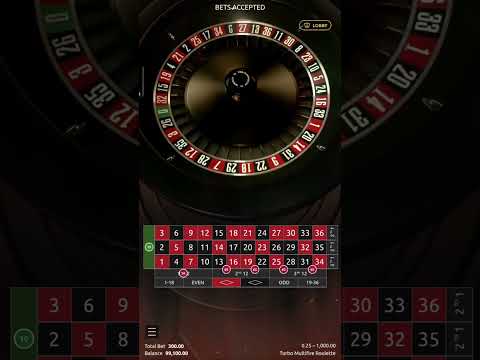
High limit roulette typically defaults to European single-zero wheels, carrying a 2.7% house edge. Some premium lobbies offer French roulette with la partage, which returns half of even-money bets when zero hits, reducing the effective edge to 1.35%. Players should always confirm which wheel variant is loaded, as American double-zero wheels with higher house edges sometimes show up even at elevated stakes.