
Switching to the LEGACY coverage degree results in a less secure system and applications. To work round this drawback, use the DEFAULT cryptographic coverage whereas connecting to the Customer Portal API. Alternatively, we are entitled to immediately obtain and/or installsecurity updates regardless of your settings. In these circumstances, we willprovide you with the relevant data, e.g. in this securityadvisory. Move these 2 recordsdata (/etc/ssh/ssh_host_rsa_key.pub and /etc/ssh/ssh_host_rsa_key) to /tmp listing. SHA1 deprecated setting for SSH vulnerability detected on API Gateway equipment.
As such, the set of enabled algorithms or acceptable key sizes in any offered coverage may change in the course of the lifetime of Red Hat Enterprise Linux. For the opposite phases in the ssh connection, like key exchange, or public key authentication, other expressions for the grep command have for use. This will record supported key exchange algorithms, ciphers, MACs, and more. Nmap is a robust community scanning software that may also be used to enumerate the SSH algorithms supported by a server utilizing the ssh2-enum-algos script. This demonstrates that whereas weak algorithms can be found as fallback choices, the SSH implementation correctly prioritizes secure trendy algorithms when each client and server assist them.
Disabled In Default Coverage, However Enabled In Legacy Coverage
Ifan replace isn’t attainable in a timely method, customers are recommended tofollow the mitigations and workarounds described in the followingsection. A Pink Hat subscription offers unlimited access to our knowledgebase, instruments, and rather more. For extra particulars, see the crypto-policies handbook with man crypto-policies. If your original report came from a security scanner (like Rapid7, Qualys, or Nessus), re-running the scan is essentially the most direct approach to affirm remediation.
After making use of crypto-policy modifications or customizing your SSH configuration, it’s essential to substantiate that the weak algorithms are not accepted by the server. Without proper validation, weak settings may silently persist, particularly if coverage modules or defaults were not applied as meant. Red Hat permits administrators to increase or modify system-wide cryptographic settings via using customized coverage modules. These modules are easy textual content recordsdata that permit you to enable or disable particular cryptographic algorithms, tailor-made to your environment’s security necessities. These flagged vulnerabilities remained regardless of explicitly configuring safe settings in /etc/ssh/sshd_config throughout our Purple Hat techniques (RHEL 7, 8, and 9).
Ciphers are liable for encrypting the data transferred between the SSH client and server, ensuring confidentiality. The ‘+’ before the listing instructs ssh to appendthe algorithm to the client’s default set rather than replacing thedefault. By appending, you’ll mechanically upgrade to the bestsupported algorithm when the server starts supporting it. You can discover example subpolicies in the /usr/share/crypto-policies/policies/modules/ directory. The subpolicy recordsdata on this listing comprise additionally descriptions in lines that are commented out.
Configure Ntp Server Utilizing Ntpd On Fedora 30
Switching to the FIPS coverage doesn’t guarantee compliance with the FIPS a hundred and forty normal. You also must re-generate all cryptographic keys after you set the system to FIPS mode. The output of the ssh -Q command will not take into accounts the configuration changes that may have been made. It can’t due to this fact be used to check the crypto configuration changes. It is a conservative safety stage that’s believed to withstand any near-term future assaults. If you have numerous servers affected by the identical vulnerability, you possibly can easily apply the advised fix using Ansible.
These ciphersuites and protocols are disabled in the DEFAULT crypto policy level. They could be enabled by switching the system crypto coverage stage to LEGACY. A safety problem has been recognized within the Bosch MAP 5000 family ofproducts, which stems from using insecure cryptographic algorithmsin the SSH service configuration. It may expose techniques to cryptographicattacks, unauthorized entry, or information leakage.
If your vulnerability reviews have flagged these, you should explicitly take away them from your crypto-policy setup. From our findings, after applying the SSH hardening insurance policies, a re-analysis of the SSH algorithm negotiation above reveals that solely robust algorithms at the moment are being provided. Specifically, we not see weak algorithms such as hmac-sha1 or diffie-hellman-group14-sha1 in the listing. Instead, solely secure algorithms like curve25519-sha256, email protected, and hmac-sha2-256 are negotiated. As you presumably can see, the weak algorithms that have been current earlier than hardening have been efficiently eliminated.
Legacy Choices
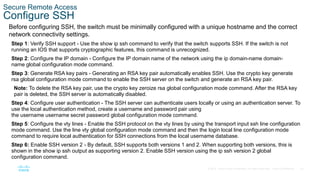
- Each considered one of these stages will use some type of encryption, and there are configuration settings that management which cryptographic algorithms can be used at every step.
- This tells the system to make use of the DEFAULT policy with the modifications defined in your custom module.
- The default system-wide cryptographic policy in Pink Hat Enterprise Linux 8 does not allow communication using older, insecure protocols.
- For more details, see the crypto-policies manual with man crypto-policies.
This tells the system to use the DEFAULT policy with the modifications defined in your custom module. MACs (Message Authentication Codes) ensure the https://emergencyfans.com/people/mickey_michaels.htm integrity and authenticity of information despatched over an SSH connection. This secret is then used to create the encryption and authentication keys that defend the SSH session. For a successful connection, there should be at least onemutually-supported choice for every parameter. We help Purple Hat users innovate and obtain their objectives with our services with content material they can trust.
Stop Utilizing Static Tokens: Dynamic Serviceaccount Tokens On Openshift With Openbao Kubernetes Secrets And Techniques Engine
So, after the client and server full the vital thing trade (KEX) and agree on a shared secret key, that key’s used to create encryption keys for the session. A mismatch between the client and server during authentication will causeauthentication to fail, despite it showing to be configured. For instance,an ssh-dss person key may be listed in.ssh/authorized_keys however might not move authentication because,by default, sshd does not settle for this key sort. This page describes what to do when OpenSSH refusesto join with an implementation that only helps legacy algorithms. As A Result Of the SHA-1 hash function has an inherently weak design, and advancing cryptanalysis has made it weak to assaults, RHEL eight doesn’t use SHA-1 by default.